
November 9, 2026
November 9, 2026
This week is Anti-Bullying Week: an important campaign dedicated to raising awareness of bullying and its lasting impact on mental health and wellbeing. At Inspire Wellbeing Services, we want to explore the possible signs and effects of bullying, alongside practical coping strategies and resources that can support both those experiencing it and those supporting them. No one should have to face bullying alone, and understanding how to seek support can be an important first step towards healing and recovery.
The Anti-Bullying Alliance is the campaign leader for Anti-Bullying Week. It is estimated that around eight million children and young people are reached in their campaign each year and this year their message is clear: ‘Break the silence’.
Their campaign reads:
‘Break the Silence – will encourage children, young people and adults across the UK to start conversations about bullying, speak up, listen and take action together.’
The message is a powerful reminder that tackling bullying is something we all have a role in. Breaking the silence can be the first step towards helping someone feel heard, supported and safe. Whether you are experiencing bullying yourself, witnessing it, or supporting someone who is, starting a conversation can make a real difference.
At Inspire Wellbeing Services, we believe that creating open and supportive conversations around bullying can help reduce the stigma, encourage people to seek support and remind those affected that they do not have to face it alone.
Bullying is often associated with childhood and school, but it can happen at any stage of life. Children, teenagers and adults can all experience bullying in different environments, including schools, workplaces, social groups, communities and online.
Bullying can take many forms, from verbal insults, intimidation and exclusion to physical behaviour, harassment and cyberbullying. Regardless of where or when it happens, the impact can be significant, affecting a person’s confidence, self-esteem, relationships and mental health.
It is important to remember that bullying is never something you simply have to “put up with” because of your age or circumstances. Everyone deserves to feel safe, respected and supported, and help is available for those experiencing bullying at any point in their lives.
The signs of bullying can look different depending on a person’s age and circumstances. Some people may openly talk about what is happening, while others may withdraw or show changes in their behaviour without explaining why.
Some common signs include:
Changes in behaviour – becoming unusually quiet, withdrawn, angry or emotional.
Reluctance to attend school – regularly complaining of feeling unwell, avoiding school or becoming distressed.
Changes in friendships – losing friends, becoming isolated or suddenly avoiding social situations.
Physical symptoms – unexplained headaches, stomach aches, tiredness or difficulty sleeping.
Loss of confidence and/or self-esteem.
Changes in schoolwork – a drop in concentration, motivation, attendance or academic performance.
Missing or damaged belongings – books, clothing, phones or other possessions going missing or being damaged.
Changes in eating or sleeping – eating significantly more or less, nightmares or disrupted sleep.
Emotional distress – increased anxiety, low mood, tearfulness or loss of confidence.
Changes in online behaviour – becoming secretive about devices, appearing upset after using social media or suddenly avoiding it.
Experiencing bullying within the home significantly increases a child’s vulnerability to being targeted by peers at school. Ongoing bullying at home often lowers a child’s self-esteem and can result in developing passive coping habits, which peers in or out of school may spot and exploit.
Adults may experience many of the same emotional effects. However, the signs can sometimes be harder to recognise because bullying may take place in the workplace, relationships, social groups or online.
Possible signs include:
Increased anxiety or stress, particularly before work or social situations.
Loss of confidence and/or self-esteem.
Withdrawing from colleagues, friends or family.
Changes in work performance, motivation or concentration.
Taking more time off work or frequently feeling unable to attend.
Difficulty sleeping or persistent tiredness.
Physical symptoms, such as headaches, stomach problems or feeling constantly tense.
Becoming unusually irritable, upset or emotional.
Avoiding particular people, places or situations.
Feeling isolated, powerless or constantly worried about what others think.
One of the biggest differences is that children may show changes in behaviour, rather than sharing verbally that something is wrong, particularly if they don’t have the words or confidence to explain what they are experiencing. Often children are fearful of the consequences of telling an adult in case they get found out; they may worry that the bullying will get worse.
Adults may be more likely to internalise their experiences or try to carry on as normal, particularly when bullying is happening at work or within an important relationship. They may worry about the consequences of speaking up, such as losing their job, damaging relationships or not being believed.
There is not a checklist of signs that would prove someone is being bullied. The signals might have many causes, so they should be viewed as reasons to check in with someone rather than assumptions about what is happening.
Noticing a change in someone’s behaviour can be the first step towards opening a conversation and offering support whatever their age.
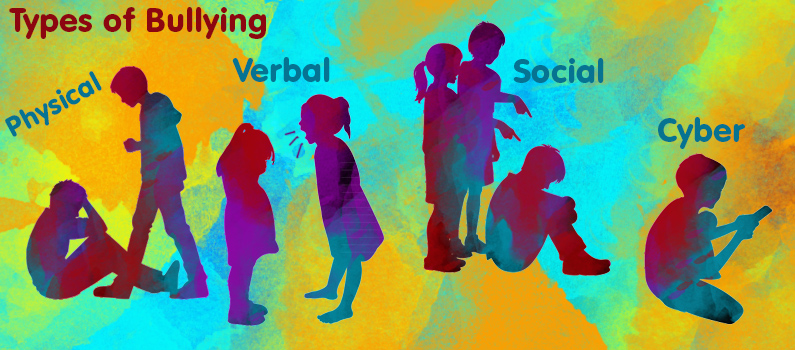
Bullying can take many different forms, and it is not always obvious when it is happening. It can occur in person, online, at school, in the workplace, within friendship and family groups, or in other social environments.
Verbal bullying involves using words to hurt, intimidate or humiliate someone. This can include name-calling, insults, threats, teasing or repeatedly making hurtful comments about someone.
Physical bullying involves physical actions intended to hurt or intimidate another person. This may include hitting, pushing, kicking, damaging or taking someone’s belongings, or deliberately invading their personal space.
Social or relational bullying focuses on excluding or isolating someone. This might involve deliberately leaving someone out, spreading rumours, encouraging others not to talk to them, or manipulating friendships and social groups.
Cyberbullying takes place through technology and online platforms, including social media, messaging apps, gaming platforms and online communities. It can include sending abusive messages, sharing embarrassing content, spreading rumours or deliberately excluding someone online.
Emotional or psychological bullying can involve repeated behaviour designed to undermine someone’s confidence, create fear or make them feel powerless. This may include intimidation, manipulation, humiliation or deliberately making someone feel isolated.
Workplace bullying can affect adults of any age and may involve repeated criticism, humiliation, intimidation, exclusion or undermining someone’s work. It can have a significant impact on a person’s confidence, wellbeing and mental health.
It’s important to remember that bullying doesn’t always fit neatly into one category. Different types of bullying can happen at the same time, and the impact can be significant regardless of how the bullying takes place.
Asking for help is not a sign of weakness. Whether you are experiencing bullying yourself, supporting someone else, or concerned about what you have witnessed, reaching out can be an important first step to ‘break the silence’ and help create a safer, more supportive environment for the person experiencing this.
Get in contact with a member of our team if you want to explore support options.
Anti-Bullying Week 2026

Navigating fireworks with PTSD
Why do we use outcome measurement tools?
November 9, 2026
October 20, 2026
September 21, 2026
Get in contact with a member of our team for the right support